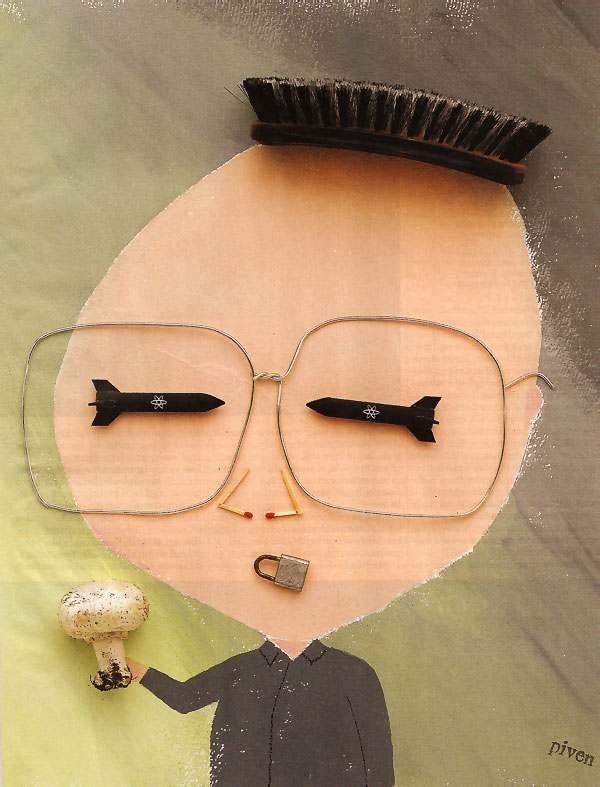
Expectations about you can stifle who you really are.
Expectations held by yourself or by somebody else?
Do you remember talking about class systems?
They are social structures invented by people in power so that their privileges---both tangible and intangible---are secured for them and the ones whom they care most, namely their spouses and children.
They make you believe that it is as natural as the sun setting in the west that the upper class deserves comfort and respect.
Conversely, the lower class is made to believe that they do not deserve as much. It often extends to the types of occupation that you can engage in.
The jobs that the lower class is allowed to take up are those that the upper class finds undesirable. Menial jobs, physical jobs...
The powerful make the less powerful believe that they are physically and mentally inferior and only worthy of such work.
A class system has a built-in way of sustaining itself. That is, it denies the lower class the nutrition and the education that are necessary for physical and mental development and maintenance.
The powerful have been most of the time smart enough not to deprive the lower class too much.
Otherwise, they would have been extinct. The dead cannot clean your toilet or slaughter cattle for you.
The lower class had to be kept not only healthy, but also educated just enough so that they can be helpful to their masters.
Again, a moron cannot be too much of a help.
But they should not be equipped with too much of analytical skills to question the legitimacy of the system.
I think stereotypes based on gender, ethnicity, nationality, sexual orientation, looks, etc. have the same effects as social classes.
Aren't they simply perceptions or widely agreed observations?
We are often told not to be bothered by what others think about us, but in fact, perceptions play an important role in what we can be.
I think you should be concerned if all others think you are an idiot.
The advice above does not distinguish the case between a true idiot and a genius misunderstood. But if everyone treats you like an idiot, what difference does it make whether you are a real idiot or an idiot in disguise?
In either case, you would most likely get very upset.
If we think about human dignity, the treatment is unjustified in both cases.
Extending the logic, we can say that there is a very low barrier against becoming a criminal when everyone thinks you are a criminal or a candidate for one.
Very much so. If more people of your gender, ethnicity, nationality, sexual orientation or looks happen to be in jail than other groups, it is very likely that you, just like the others in jail, have not had good education, do not have a job, or both. If people look at you as if you were a criminal, even as you walk down the street, you are more susceptible to become one, especially because the possibility of not having a decent job or never having one is also high.
Nothing is lost by acting as the others expect of you, whether the expectations are justified or not.
Your environment is shaped by what people around you think is going to and should happen. In other words, everything is set up so that it is best if you think and act according to their idea of who you are. You need extraordinary will power to fight against that.
That is why expectations tend to be self-fulfilling.
Gender, ethnicity, nationality, sexual orientation and looks often determine the privileged/underprivileged line, when there is no official class system. It goes without saying that the underprivileged are associated with negative stereotypes.
Most of the time, they are ill prepared to avoid the social traps by the very fact that they are underprivileged and do not have enough resources at their disposal. The vicious circle defined by stereotypes perpetuates, just like the class system.
The formula also applies to social conventions, which are more or less arbitrary. The more privileged set the norm, and that, naturally to their advantage; they define their attributes and behavior as the most desirable. Their ways of speaking, clothing themselves, interacting with people, organizing communities. Their physical properties, too. The less powerful are penalized for being different.
If they did otherwise, they would not have retained power for a long time.
Think about the world in which the current status of the privileged and the underprivileged is reversed.
I wouldn't be surprised if the currently-less-privileged complain that the currently-more-privileged lack social skills and that is why they cannot be promoted to managerial positions.
And for lack of sense of humor. Acceptable social conventions are arbitrary; table manners are a good example.
If it is considered polite to expel all sorts of gas at the end of the meal as a sign of appreciation...
Intestinal gas may be physiologically challenging, though, because it requires more digestion time than the gas from the stomach.
Shall I try it next time?
I saw "Africa Paradis" by Sylvestre Amoussou, a film about Africa that is more prosperous than Europe. The year is 2033 and Europeans are desperate to immigrate to Africa to seek better opportunities and life. The sad thing is that it was very effective in seeing how little compassion the First World has for the Third World today. As I saw the white servants scurrying around the black masters, I couldn't do away with the feeling that something was odd---it shocked me when I realized that the feeling persisted.
It is entrenched in your mind that the other way around is normal.
Let me add that I was also shocked when I saw a clip from a documentary film on apartheid in South Africa.
It is all a matter of whether you are used to it or not, which means again that any social arrangement can last long.
Psychological effects can be insidious, as we noted in the case of being looked upon as a criminal. There are less overt ones, but nonetheless damaging.
For example, you can be only good at sports and music, or you cannot be good at physics, etc., because of your ethnicity.
You may be good at math as an elementary school student, but what if your teacher does not see it because you belong to the "wrong" gender or ethnicity? What if you are told that it was a fluke that you did good in the exam, or even worse, that you must have cheated?
Tell me, what exactly happened?
I made a remark that fluid dynamics and aerodynamics are essentially the same. In fact, aerodynamics is a subfield of fluid dynamics.
How so?
Fluid dynamics studies the motion of fluid which can be liquid or gas. It is just that liquid is more viscous than gas, but they share the principles. But the person whom I was talking to said that he wanted to talk to someone who really knew the subject and asked me to introduce him to that person.
And?
I said that I was the most knowledgeable person that he could find within the circle of 10 kilometer radius. But he insisted.
I presume that your looks got in the way.
He didn't even investigate further how much I knew! A little later, I found him conversing with a Woody Allen look alike. I know him---he talks a lot, but is really scattered. They looked happy together.
How the world sees you has real effects...
"We are nothing but what we are in the eyes of others, and their views are the first step in coming to terms with ourselves as ourselves."
Nous ne sommes nous qu'aux yeux des autres et c'est à partir du regards des autres que nous nous assumons comme nous. Jean-Paul again!
The situation becomes more complicated when the underprivileged do not make enough efforts to get themselves out of that wretched scheme.
It is true that they need help, but without efforts on their part, the whole rescue plan would not work. A doctor cannot save a patient who has given up the will to live.
I see insufficient trust and good will on both sides.
A stronger sense of responsibility for our past and future would help, too.
At the end of the day, we all need and deserve dignity and respect from others.
I would hate it if I were good at math and have to fight against the idea that limitations are imposed on by my genetic makeup or the environment in which I was brought up. I would also have to fight against the lingering feeling that what my rational self thinks is nonsensical prejudice may be truth instead.
What if you happen to belong to the less preferred group and someone from the most preferred says to you, "You're not typical"?
And the remark is meant to be a compliment...
All I want is to be simply myself, unencumbered by any prejudice or preconceived notion.
Let me assure you that you are the only one who wants to be you.
Expectations held by yourself or by somebody else?
Do you remember talking about class systems?
They are social structures invented by people in power so that their privileges---both tangible and intangible---are secured for them and the ones whom they care most, namely their spouses and children.
They make you believe that it is as natural as the sun setting in the west that the upper class deserves comfort and respect.
Conversely, the lower class is made to believe that they do not deserve as much. It often extends to the types of occupation that you can engage in.
The jobs that the lower class is allowed to take up are those that the upper class finds undesirable. Menial jobs, physical jobs...
The powerful make the less powerful believe that they are physically and mentally inferior and only worthy of such work.
A class system has a built-in way of sustaining itself. That is, it denies the lower class the nutrition and the education that are necessary for physical and mental development and maintenance.
The powerful have been most of the time smart enough not to deprive the lower class too much.
Otherwise, they would have been extinct. The dead cannot clean your toilet or slaughter cattle for you.
The lower class had to be kept not only healthy, but also educated just enough so that they can be helpful to their masters.
Again, a moron cannot be too much of a help.
But they should not be equipped with too much of analytical skills to question the legitimacy of the system.
I think stereotypes based on gender, ethnicity, nationality, sexual orientation, looks, etc. have the same effects as social classes.
Aren't they simply perceptions or widely agreed observations?
We are often told not to be bothered by what others think about us, but in fact, perceptions play an important role in what we can be.
I think you should be concerned if all others think you are an idiot.
The advice above does not distinguish the case between a true idiot and a genius misunderstood. But if everyone treats you like an idiot, what difference does it make whether you are a real idiot or an idiot in disguise?
In either case, you would most likely get very upset.
If we think about human dignity, the treatment is unjustified in both cases.
Extending the logic, we can say that there is a very low barrier against becoming a criminal when everyone thinks you are a criminal or a candidate for one.
Very much so. If more people of your gender, ethnicity, nationality, sexual orientation or looks happen to be in jail than other groups, it is very likely that you, just like the others in jail, have not had good education, do not have a job, or both. If people look at you as if you were a criminal, even as you walk down the street, you are more susceptible to become one, especially because the possibility of not having a decent job or never having one is also high.
Nothing is lost by acting as the others expect of you, whether the expectations are justified or not.
Your environment is shaped by what people around you think is going to and should happen. In other words, everything is set up so that it is best if you think and act according to their idea of who you are. You need extraordinary will power to fight against that.
That is why expectations tend to be self-fulfilling.
Gender, ethnicity, nationality, sexual orientation and looks often determine the privileged/underprivileged line, when there is no official class system. It goes without saying that the underprivileged are associated with negative stereotypes.
Most of the time, they are ill prepared to avoid the social traps by the very fact that they are underprivileged and do not have enough resources at their disposal. The vicious circle defined by stereotypes perpetuates, just like the class system.
The formula also applies to social conventions, which are more or less arbitrary. The more privileged set the norm, and that, naturally to their advantage; they define their attributes and behavior as the most desirable. Their ways of speaking, clothing themselves, interacting with people, organizing communities. Their physical properties, too. The less powerful are penalized for being different.
If they did otherwise, they would not have retained power for a long time.
Think about the world in which the current status of the privileged and the underprivileged is reversed.
I wouldn't be surprised if the currently-less-privileged complain that the currently-more-privileged lack social skills and that is why they cannot be promoted to managerial positions.
And for lack of sense of humor. Acceptable social conventions are arbitrary; table manners are a good example.
If it is considered polite to expel all sorts of gas at the end of the meal as a sign of appreciation...
Intestinal gas may be physiologically challenging, though, because it requires more digestion time than the gas from the stomach.
Shall I try it next time?
I saw "Africa Paradis" by Sylvestre Amoussou, a film about Africa that is more prosperous than Europe. The year is 2033 and Europeans are desperate to immigrate to Africa to seek better opportunities and life. The sad thing is that it was very effective in seeing how little compassion the First World has for the Third World today. As I saw the white servants scurrying around the black masters, I couldn't do away with the feeling that something was odd---it shocked me when I realized that the feeling persisted.
It is entrenched in your mind that the other way around is normal.
Let me add that I was also shocked when I saw a clip from a documentary film on apartheid in South Africa.
It is all a matter of whether you are used to it or not, which means again that any social arrangement can last long.
Psychological effects can be insidious, as we noted in the case of being looked upon as a criminal. There are less overt ones, but nonetheless damaging.
For example, you can be only good at sports and music, or you cannot be good at physics, etc., because of your ethnicity.
You may be good at math as an elementary school student, but what if your teacher does not see it because you belong to the "wrong" gender or ethnicity? What if you are told that it was a fluke that you did good in the exam, or even worse, that you must have cheated?
Tell me, what exactly happened?
I made a remark that fluid dynamics and aerodynamics are essentially the same. In fact, aerodynamics is a subfield of fluid dynamics.
How so?
Fluid dynamics studies the motion of fluid which can be liquid or gas. It is just that liquid is more viscous than gas, but they share the principles. But the person whom I was talking to said that he wanted to talk to someone who really knew the subject and asked me to introduce him to that person.
And?
I said that I was the most knowledgeable person that he could find within the circle of 10 kilometer radius. But he insisted.
I presume that your looks got in the way.
He didn't even investigate further how much I knew! A little later, I found him conversing with a Woody Allen look alike. I know him---he talks a lot, but is really scattered. They looked happy together.
How the world sees you has real effects...
"We are nothing but what we are in the eyes of others, and their views are the first step in coming to terms with ourselves as ourselves."
Nous ne sommes nous qu'aux yeux des autres et c'est à partir du regards des autres que nous nous assumons comme nous. Jean-Paul again!
The situation becomes more complicated when the underprivileged do not make enough efforts to get themselves out of that wretched scheme.
It is true that they need help, but without efforts on their part, the whole rescue plan would not work. A doctor cannot save a patient who has given up the will to live.
I see insufficient trust and good will on both sides.
A stronger sense of responsibility for our past and future would help, too.
At the end of the day, we all need and deserve dignity and respect from others.
I would hate it if I were good at math and have to fight against the idea that limitations are imposed on by my genetic makeup or the environment in which I was brought up. I would also have to fight against the lingering feeling that what my rational self thinks is nonsensical prejudice may be truth instead.
What if you happen to belong to the less preferred group and someone from the most preferred says to you, "You're not typical"?

And the remark is meant to be a compliment...
All I want is to be simply myself, unencumbered by any prejudice or preconceived notion.
Let me assure you that you are the only one who wants to be you.


 Posts